Atlantic Ocean
The second-largest ocean on the globe, crossed by great migrations of tuna and deep-sea squid.
- 🌊Caribbean Sea
- 🌊Mediterranean Sea
- 🪸Coral reef
- 🪸High seas / open water
- 🪸Mangroves
- 🌑Epipelagic zone
- 🌑Mesopelagic zone
- 🌑Bathypelagic zone
Trenches in this ocean

Pelican eel
Eurypharynx pelecanoides
Pelican eel
Equipped with an oversized mouth able to stretch to swallow prey far larger than itself, it compensates for poor eyesight with a bioluminescent tail used as a lure.
🌊 500–3000 m
- ⚡ Can swallow prey far larger than itself thanks to an extensible stomach
- ⚡ Has a light organ at the tip of its tail used as a lure

Humpback anglerfish
Melanocetus johnsonii
Humpback anglerfish
Hunts in total darkness using a bioluminescent lure dangling above its mouth, and practises one of the strangest reproductive strategies in the animal kingdom: the tiny male ends up fusing with the female.
🌊 300–1200 m
- ⚡ Fishes with a bioluminescent lure produced by symbiotic bacteria
- ⚡ Extreme sexual parasitism: the male fuses physically and vascularly with the female

Giant squid
Architeuthis dux
Giant squid
The source of the Kraken myth for centuries, it is one of the largest invertebrate creatures known, never filmed alive in its natural habitat before 2004.
🌊 300–1000 m
- ⚡ The largest eyes in the animal kingdom (up to 27 cm in diameter)
- ⚡ Copper-based blue blood, adapted to carrying oxygen in cold, deep water

Vampire squid
Vampyroteuthis infernalis
Vampire squid
Despite its terrifying name, "vampire squid from hell", it is a peaceful creature that doesn't hunt but instead filters organic debris drifting in total darkness.
🌊 600–1200 m
- ⚡ Releases a cloud of bioluminescent mucus instead of ink to escape predators
- ⚡ Can turn its membrane inside out like a cape bristling with false spines

Grooved brain coral
Diploria labyrinthiformis
Grooved brain coral
Beneath its motionless, brain-like surface lies a living colony of thousands of tiny animals, slowly building — millimeter by millimeter — an architecture centuries in the making.
🌊 1–30 m
- ⚡ Can live for centuries, ranking among the longest-lived animals on Earth, its skeleton built at barely 3.5 mm per year
- ⚡ Hosts millions of symbiotic algae inside its own tissue, harvesting sunlight like a plant while remaining a true animal

Swordfish
Xiphias gladius
Swordfish
Its sharp bill, as long as a sword, lets it strike prey at full speed, making it one of the fastest fish in the ocean.
🌊 30–180 m
- ⚡ Actively warms its eyes and brain thanks to a unique thermogenic organ
- ⚡ Among the fastest fish in the ocean thanks to its hydrodynamic body and bill
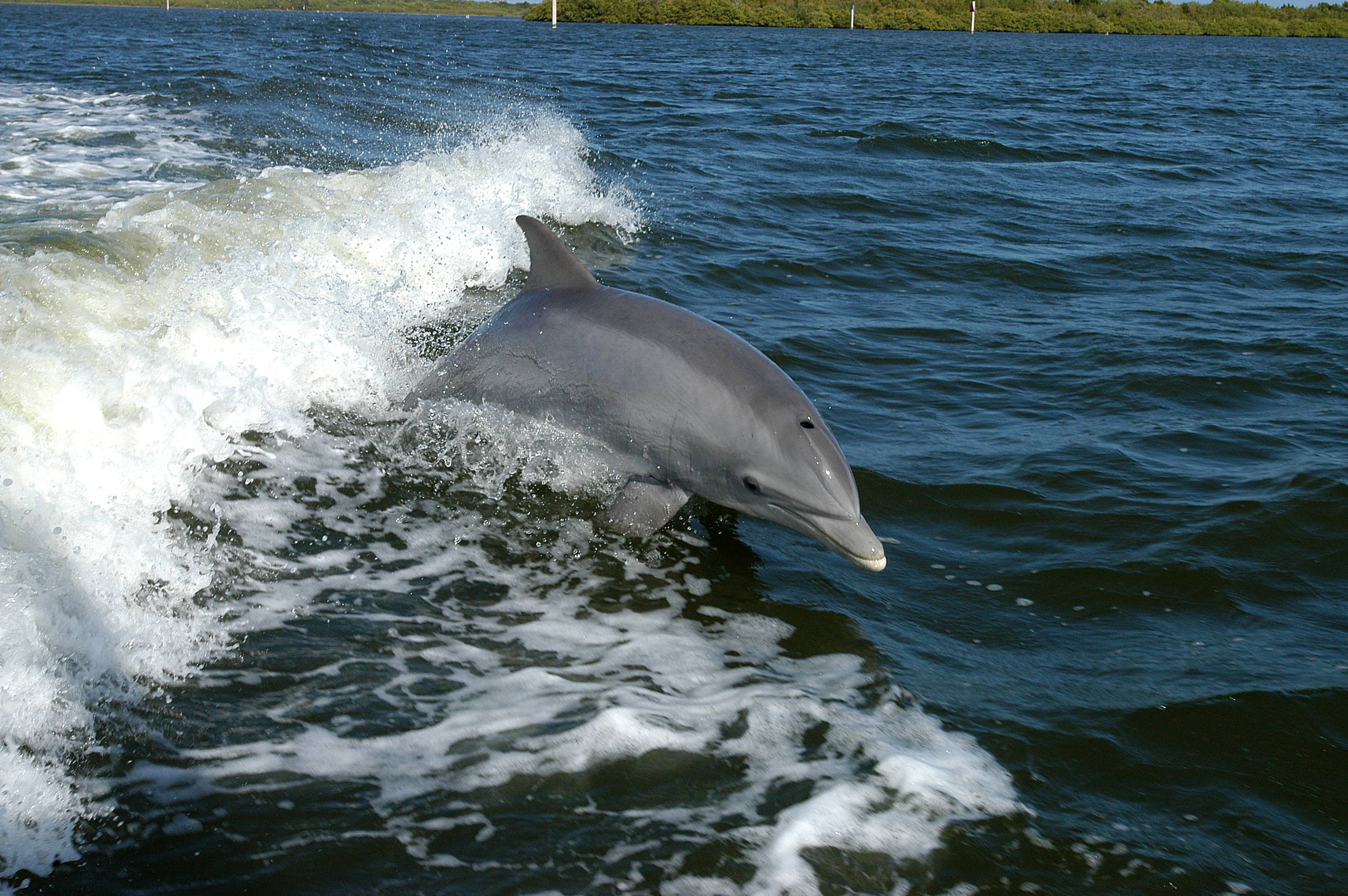
Common bottlenose dolphin
Tursiops truncatus
Common bottlenose dolphin
Intelligent, playful, and capable of recognizing its own reflection, the bottlenose dolphin communicates through a unique 'signature whistle' that functions almost like a name.
🌊 0–400 m
- ⚡ A unique 'signature whistle' per individual, used like a name for its entire life
- ⚡ Echolocation so precise it can detect a fish buried under sand
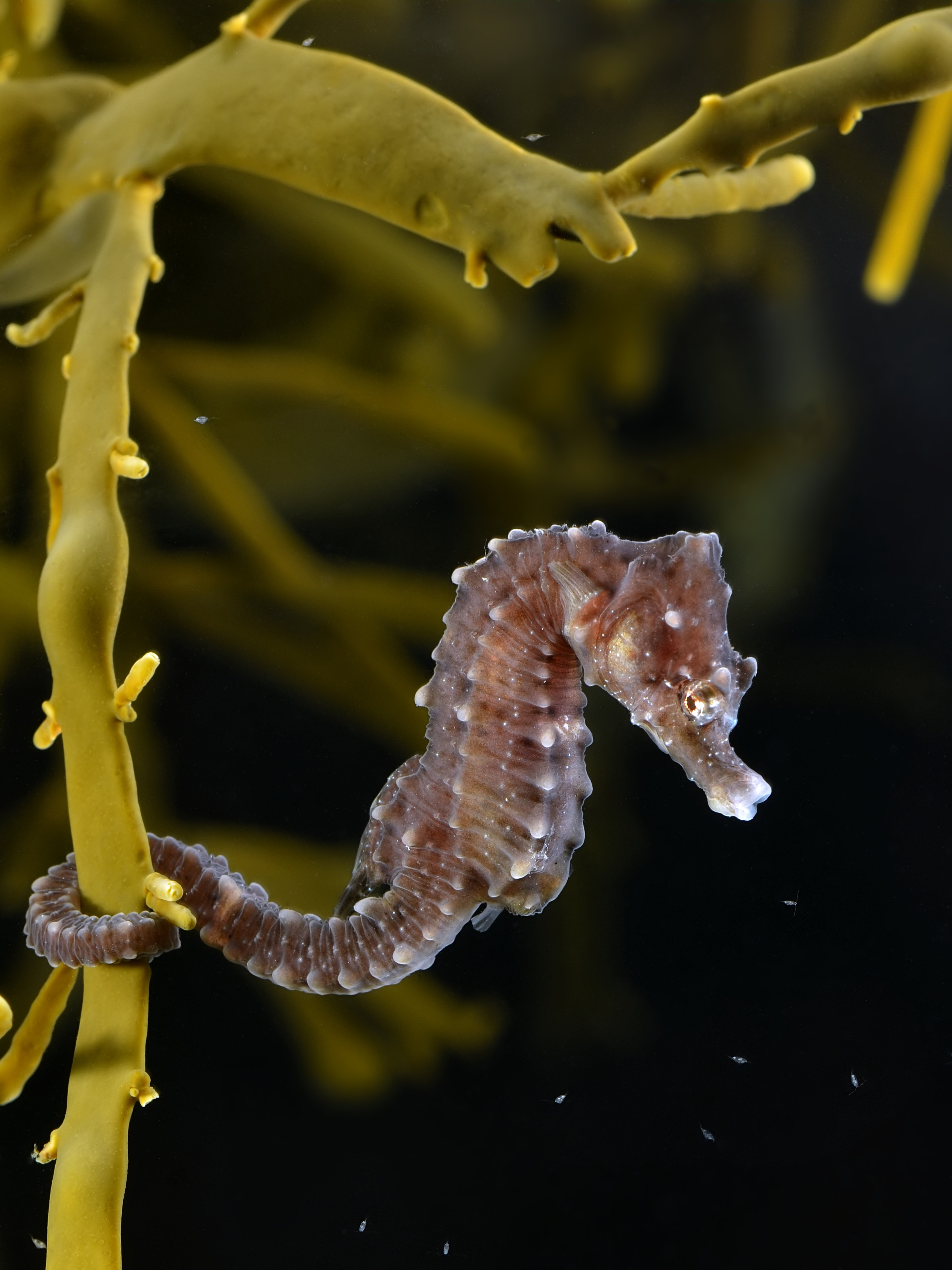
Short-snouted seahorse
Hippocampus hippocampus
Short-snouted seahorse
A tiny knight of the seagrass meadows, it is the male — not the female — who carries the eggs and gives birth, in one of the most striking role-reversals in the animal kingdom.
🌊 0–20 m
- ⚡ The male, not the female, becomes 'pregnant' and gives birth
- ⚡ Each eye moves independently of the other, letting it watch two directions at once

Caribbean manatee
Trichechus manatus
Caribbean manatee
Nicknamed the "sea cow", its peaceful demeanour and habit of grazing on seagrass may have inspired mermaid tales among sailors of old.
🌊 0–10 m
- ⚡ Can eat up to 50 kg of aquatic vegetation a day
- ⚡ Its peaceful habits may have inspired mermaid tales among sailors

Common brittle star
Ophiothrix fragilis
Common brittle star
Forms living carpets of thousands of fragile, spine-covered brittle stars that filter plankton from the current after nightfall.
🌊 0–200 m
- ⚡ Can voluntarily sever one of its own arms to escape a predator, then fully regrow it
- ⚡ Aggregates into ultra-dense living carpets, up to 2,000 individuals per square meter, forming a synchronized filter-feeding 'reef'
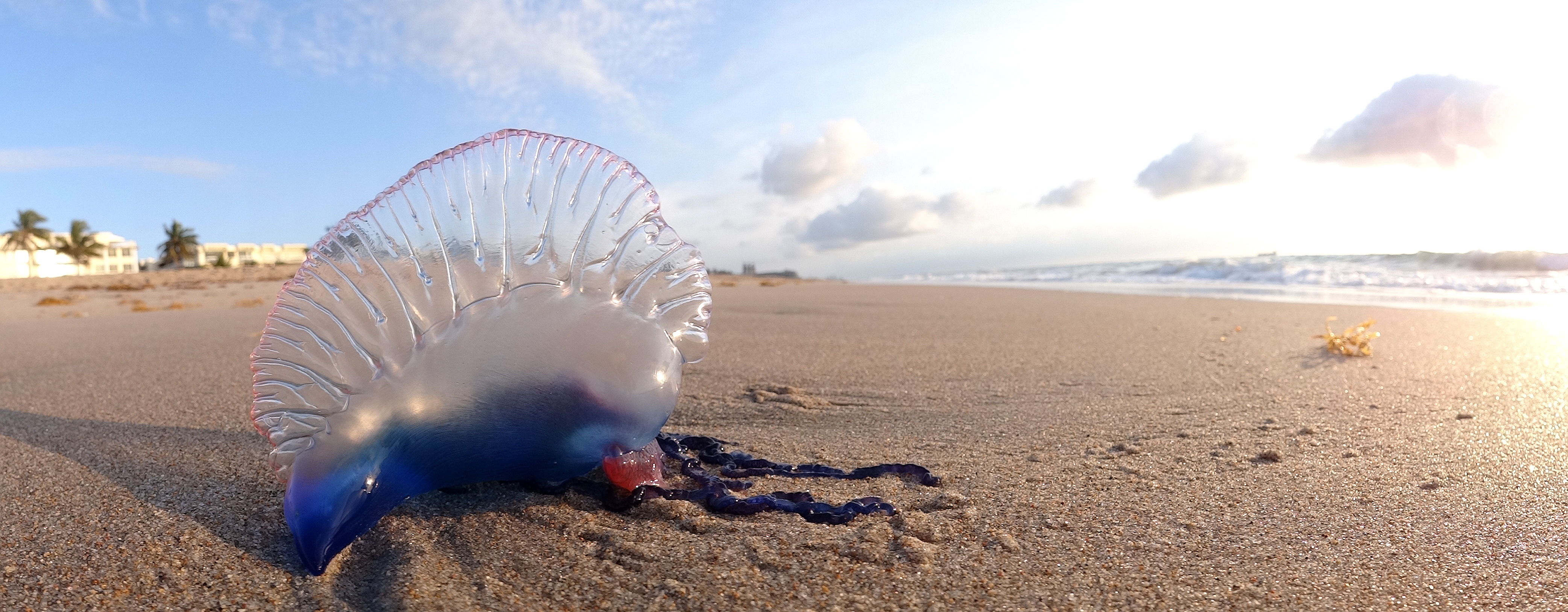
Portuguese man o' war
Physalia physalis
Portuguese man o' war
It isn't a jellyfish at all but a floating colony of thousands of microscopic individuals sharing one translucent sail, trailing venomous tentacles that can kill a fish in seconds.
🌊 0–50 m
- ⚡ A 'colony-individual': thousands of specialized clones fused into one floating organism
- ⚡ Venom that keeps stinging weeks after the animal has died

Oyster toadfish
Opsanus tau
Oyster toadfish
Able to produce a low, sustained call to attract females, it is also one of the toughest fish on the coast, able to survive several hours out of water.
🌊 0–40 m
- ⚡ Can produce a call audible out of water thanks to muscles vibrating up to 200 times per second
- ⚡ Can survive several hours out of water thanks to skin that limits dehydration

Lanternfish
Myctophum punctatum
Lanternfish
One of the most abundant fish in the ocean: every night it rises from the depths to feed near the surface, then dives back at dawn — a planet-wide daily migration.
🌊 10–700 m
- ⚡ Counter-illumination: its photophores mimic daylight to make it invisible from below
- ⚡ Undertakes one of the planet's largest animal migrations by biomass, every single day

Frilled shark
Chlamydoselachus anguineus
Frilled shark
Nicknamed the "snake shark" or a living fossil, it has changed very little in 80 million years and resembles a giant eel with 300 needle-like teeth.
🌊 50–1500 m
- ⚡ Considered a living fossil, virtually unchanged for 80 million years
- ⚡ The longest known gestation period of any vertebrate: about 3.5 years

Bull shark
Carcharhinus leucas
Bull shark
The only large shark able to survive in fresh water for long periods, it has been found more than 4,000 km up the Amazon.
🌊 0–150 m
- ⚡ The only large shark able to survive long-term in fresh water, found far up major rivers
- ⚡ A hunting technique of ramming before biting
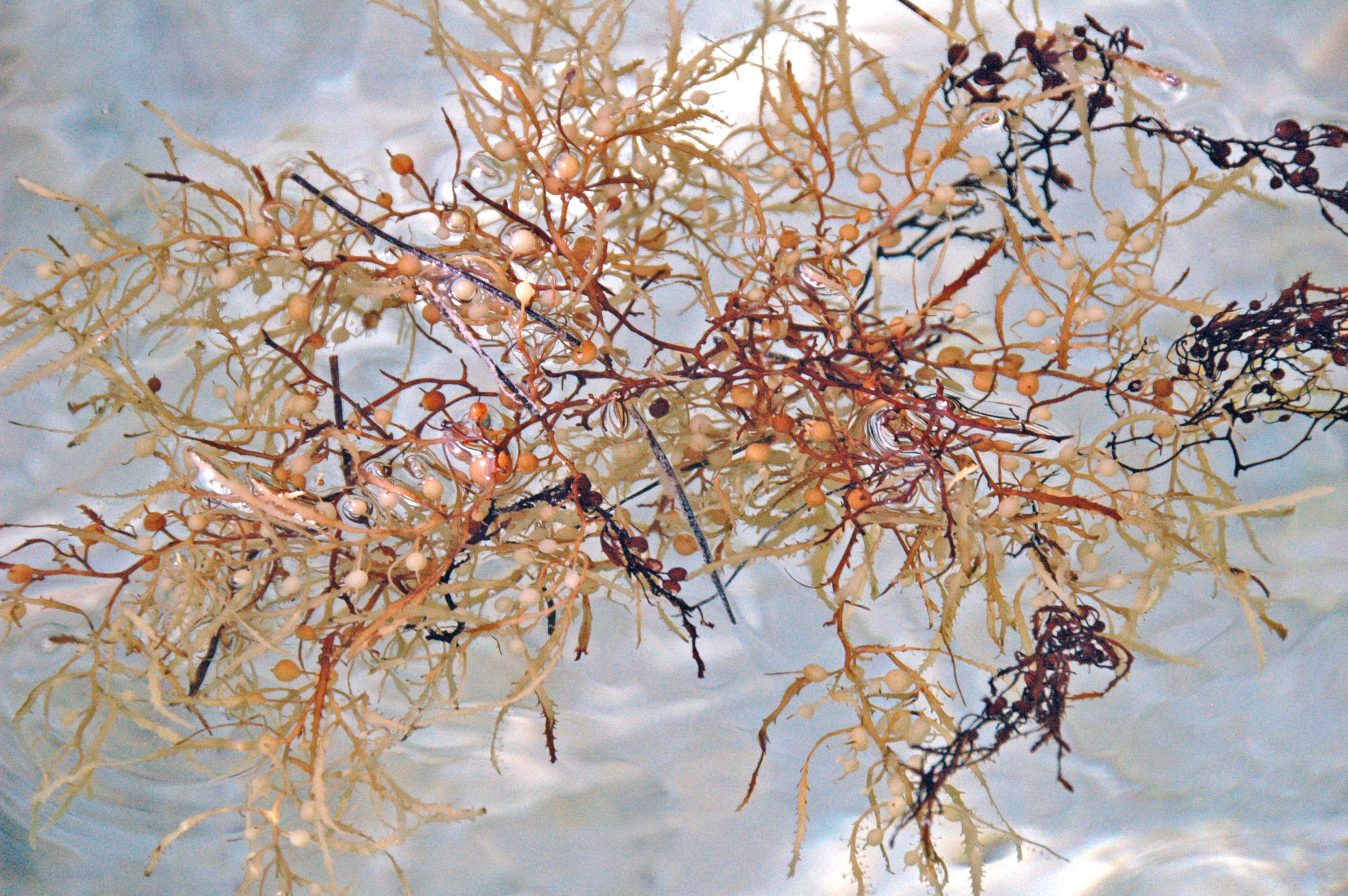
Sargassum
Sargassum natans
Sargassum
This brown alga never puts down roots: it drifts at the ocean's surface its entire life, forming immense floating rafts that gave the Sargasso Sea its name.
🌊 0–5 m
- ⚡ Reproduces only through fragmentation, with no sexual reproduction ever observed
- ⚡ Gave its name to an entire sea, the Sargasso Sea, which has no coastline at all

Common cuttlefish
Sepia officinalis
Common cuttlefish
A true chameleon of the sea, the common cuttlefish can change color and skin texture in a fraction of a second, thanks to thousands of pigment cells wired directly to its brain.
🌊 0–200 m
- ⚡ Changes skin color and texture in a fraction of a second using thousands of chromatophores individually controlled by the brain
- ⚡ Detects polarized light with extreme sensitivity — a sensory ability humans entirely lack

Atlantic bluefin tuna
Thunnus thynnus
Atlantic bluefin tuna
One of the fastest fish in the ocean, able to keep its muscles warmer than the surrounding water to cross the Atlantic during its migrations.
🌊 0–250 m
- ⚡ Can keep its muscle temperature above that of the surrounding water (regional endothermy)
- ⚡ Top speed among the highest of all bony fish

Leatherback turtle
Dermochelys coriacea
Leatherback turtle
The largest sea turtle and the deepest-diving reptile known, able to keep its body warmer than the icy deep water thanks to a unique soft, cartilaginous shell.
🌊 0–1280 m
- ⚡ The deepest-diving reptile known, beyond 1,000 m
- ⚡ Can keep its body warmer than the icy water thanks to a unique vascular system

Lionfish
Pterois volitans
Lionfish
As spectacular as it is fearsome, its long venomous fan-like fins conceal a species that has become one of the greatest invasive threats to Caribbean reefs.
🌊 0–50 m
- ⚡ Venomous fins fanned out to intimidate and defend itself
- ⚡ A voracious appetite that fuelled a record invasion of the Atlantic and the Caribbean

Mediterranean seagrass
Posidonia oceanica
Mediterranean seagrass
Some Posidonia meadows form a single clonal organism over 100,000 years old, potentially making it one of the oldest living things on the planet.
🌊 1–35 m
- ⚡ A single clonal individual may be over 100,000 years old, one of the oldest known living things
- ⚡ Captures up to 15 times more CO2 per hectare than an equivalent area of Amazon rainforest

Common torpedo
Torpedo torpedo
Common torpedo
A living 'battery' ray that immobilizes its prey in a fraction of a second with a discharge of up to 200 volts.
🌊 2–70 m
- ⚡ Generates its own electric shocks, up to 200 volts, to stun prey and deter predators
- ⚡ Detects hidden, even buried, prey through electroreception

Loggerhead sea turtle
Caretta caretta
Loggerhead sea turtle
With a massive head and jaws strong enough to crush a whole conch shell, this ocean globetrotter returns, decades later, to the exact beach where it hatched — guided by a built-in magnetic compass.
🌊 0–60 m
- ⚡ Senses Earth's magnetic field to find its way back to its natal beach after thousands of kilometers of migration
- ⚡ A jaw powerful enough to crush shellfish no other sea turtle species can access