🌐Ecosystem
High seas / open water
The great open expanses of the ocean, far from shore, home to the great pelagic migrants.
Where to find it
View this ecosystem on the map →Depths represented
Representative species

Humpback whale
Megaptera novaeangliae
Humpback whale
Famous for its spectacular breaches out of the water and its complex songs that can last for hours, it undertakes one of the longest migrations known in any mammal every year.
🌊 0–200 m
- ⚡ Songs that can last for hours and spread from one population to another
- ⚡ Hunts in groups using a coordinated bubble net, a rare technique among whales

Common brittle star
Ophiothrix fragilis
Common brittle star
Forms living carpets of thousands of fragile, spine-covered brittle stars that filter plankton from the current after nightfall.
🌊 0–200 m
- ⚡ Can voluntarily sever one of its own arms to escape a predator, then fully regrow it
- ⚡ Aggregates into ultra-dense living carpets, up to 2,000 individuals per square meter, forming a synchronized filter-feeding 'reef'

Dumbo octopus
Grimpoteuthis sp.
Dumbo octopus
The cephalopod observed at the greatest depths ever recorded: it owes its name to its two ear-shaped fins reminiscent of the Disney elephant.
🌊 1000–7000 m
- ⚡ The cephalopod observed at the greatest depths ever recorded, down to about 7,000 m
- ⚡ Swims by flapping two ear-shaped fins, a technique unique among octopuses

Frilled shark
Chlamydoselachus anguineus
Frilled shark
Nicknamed the "snake shark" or a living fossil, it has changed very little in 80 million years and resembles a giant eel with 300 needle-like teeth.
🌊 50–1500 m
- ⚡ Considered a living fossil, virtually unchanged for 80 million years
- ⚡ The longest known gestation period of any vertebrate: about 3.5 years

Whale shark
Rhincodon typus
Whale shark
The largest fish in the world, a peaceful filter feeder that can reach the size of a school bus while feeding almost exclusively on plankton.
🌊 0–1900 m
- ⚡ The largest fish in the world, able to exceed 18 metres in length
- ⚡ A spot pattern unique to each individual, like a fingerprint

Atlantic bluefin tuna
Thunnus thynnus
Atlantic bluefin tuna
One of the fastest fish in the ocean, able to keep its muscles warmer than the surrounding water to cross the Atlantic during its migrations.
🌊 0–250 m
- ⚡ Can keep its muscle temperature above that of the surrounding water (regional endothermy)
- ⚡ Top speed among the highest of all bony fish
29 other species

Pelican eel
Eurypharynx pelecanoides
Pelican eel
Equipped with an oversized mouth able to stretch to swallow prey far larger than itself, it compensates for poor eyesight with a bioluminescent tail used as a lure.
🌊 500–3000 m
- ⚡ Can swallow prey far larger than itself thanks to an extensible stomach
- ⚡ Has a light organ at the tip of its tail used as a lure

Blue whale
Balaenoptera musculus
Blue whale
The largest animal ever to have existed on Earth, the blue whale makes the ocean tremble with the sound of its own heartbeat, audible from over two miles away.
🌊 0–200 m
- ⚡ The largest animal ever recorded on Earth — heavier than any known dinosaur
- ⚡ Its heartbeat can be detected from over 3 km away underwater

Humpback anglerfish
Melanocetus johnsonii
Humpback anglerfish
Hunts in total darkness using a bioluminescent lure dangling above its mouth, and practises one of the strangest reproductive strategies in the animal kingdom: the tiny male ends up fusing with the female.
🌊 300–1200 m
- ⚡ Fishes with a bioluminescent lure produced by symbiotic bacteria
- ⚡ Extreme sexual parasitism: the male fuses physically and vascularly with the female

Sperm whale
Physeter macrocephalus
Sperm whale
The unwitting hero of the novel Moby-Dick and centuries of sailors' legends of titanic battles against monsters of the deep, the sperm whale does indeed fight real duels with the giant squid, whose sucker scars it often carries on its skin.
🌊 0–2000 m
- ⚡ Often carries sucker scars on its skin left by battles with giant squid
- ⚡ Among the deepest divers of all marine mammals, beyond 2,000 m, on a single breath for over an hour

Humboldt squid
Dosidicus gigas
Humboldt squid
Nicknamed the "red devil" for its shifting colour and aggression during group hunts, it can hunt in shoals of several hundred and communicates by rapidly changing colour.
🌊 0–1200 m
- ⚡ Changes colour in a fraction of a second, probably to coordinate group hunting
- ⚡ Tolerates extremely oxygen-poor zones inaccessible to most of its predators

Giant squid
Architeuthis dux
Giant squid
The source of the Kraken myth for centuries, it is one of the largest invertebrate creatures known, never filmed alive in its natural habitat before 2004.
🌊 300–1000 m
- ⚡ The largest eyes in the animal kingdom (up to 27 cm in diameter)
- ⚡ Copper-based blue blood, adapted to carrying oxygen in cold, deep water

Vampire squid
Vampyroteuthis infernalis
Vampire squid
Despite its terrifying name, "vampire squid from hell", it is a peaceful creature that doesn't hunt but instead filters organic debris drifting in total darkness.
🌊 600–1200 m
- ⚡ Releases a cloud of bioluminescent mucus instead of ink to escape predators
- ⚡ Can turn its membrane inside out like a cape bristling with false spines

Coelacanth
Latimeria chalumnae
Coelacanth
Believed extinct for 65 million years, alongside the dinosaurs, until its spectacular rediscovery in 1938 off South Africa.
🌊 150–700 m
- ⚡ Believed extinct for 65 million years until its rediscovery in 1938
- ⚡ Fleshy fins that move like limbs, close to the ancestor of the first land vertebrates

Japanese spider crab
Macrocheira kaempferi
Japanese spider crab
With legs that can span nearly four meters, this deep-sea Japanese crab holds the record for the largest living arthropod on Earth.
🌊 50–600 m
- ⚡ The largest leg-span of any arthropod on Earth, nearly 4 meters
- ⚡ An exceptional lifespan that may reach a century — rare among crustaceans

Swordfish
Xiphias gladius
Swordfish
Its sharp bill, as long as a sword, lets it strike prey at full speed, making it one of the fastest fish in the ocean.
🌊 30–180 m
- ⚡ Actively warms its eyes and brain thanks to a unique thermogenic organ
- ⚡ Among the fastest fish in the ocean thanks to its hydrodynamic body and bill
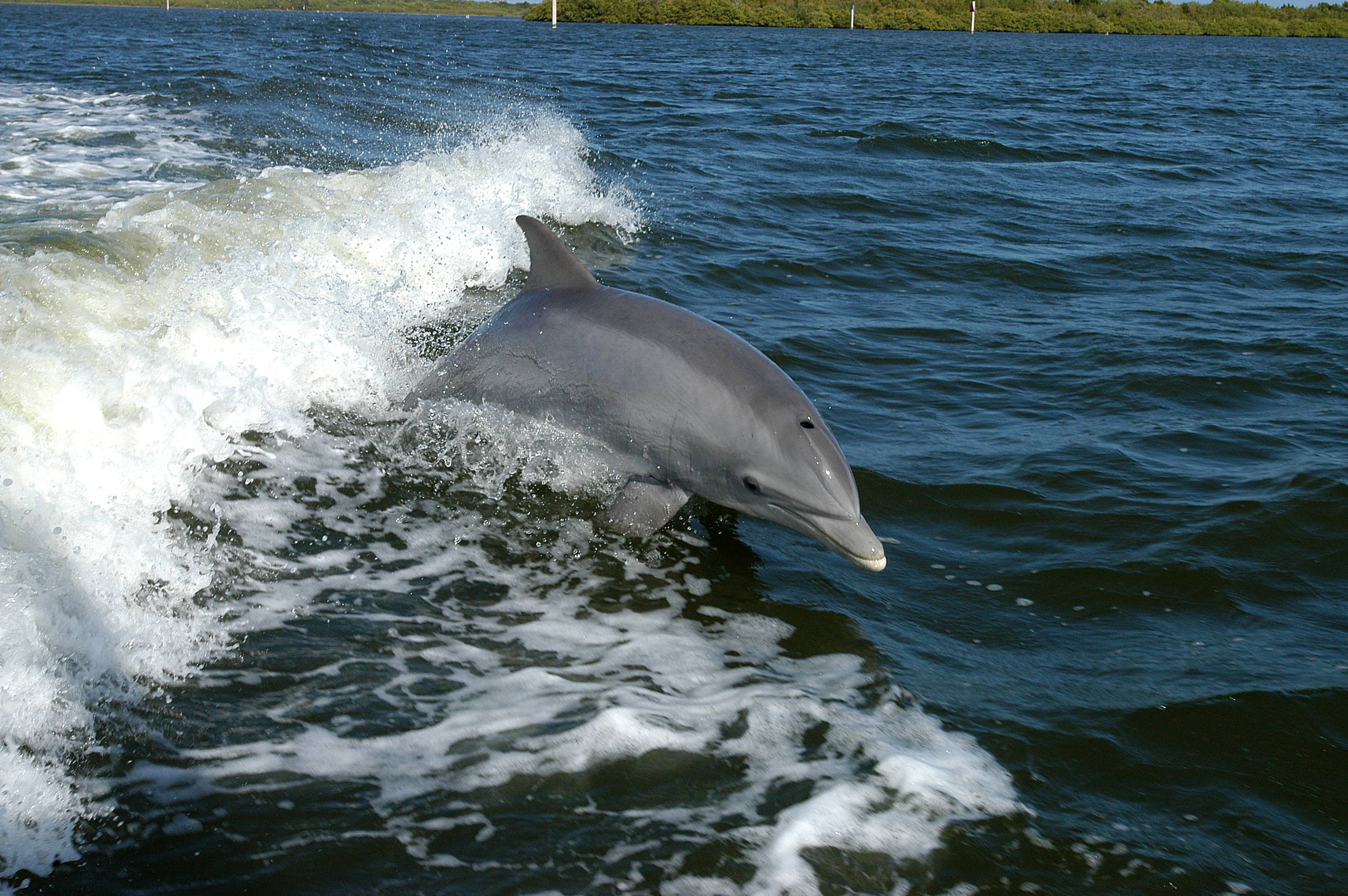
Common bottlenose dolphin
Tursiops truncatus
Common bottlenose dolphin
Intelligent, playful, and capable of recognizing its own reflection, the bottlenose dolphin communicates through a unique 'signature whistle' that functions almost like a name.
🌊 0–400 m
- ⚡ A unique 'signature whistle' per individual, used like a name for its entire life
- ⚡ Echolocation so precise it can detect a fish buried under sand

Great white shark
Carcharodon carcharias
Great white shark
An iconic apex predator able to leap clean out of the water to surprise prey, and to cover thousands of kilometres on transoceanic migrations still poorly understood.
🌊 0–1200 m
- ⚡ Can leap entirely out of the water to surprise prey at the surface
- ⚡ Ultra-fine electroreception via hundreds of ampullae of Lorenzini