
Molluscs
Humboldt squid
Dosidicus gigas
Moderate danger🌊 0–1200 m📏 up to 250 cmIUCN status: Not evaluated
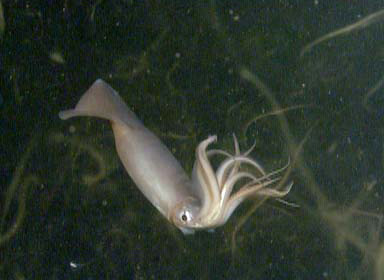
Nicknamed the "red devil" for its shifting colour and aggression during group hunts, it can hunt in shoals of several hundred and communicates by rapidly changing colour.
🗺️ Geographic range
The eastern Pacific Ocean, from Chile to California.
📊 Population
No formal global population estimate, but considered one of the most abundant cephalopods in the eastern Pacific, with cyclical population booms.
Habitat
- Pacific Ocean · High seas / open water · Mesopelagic zone · Permanent
Behaviour
- Diet
- Fish, crustaceans, other squid, sometimes even cannibalism.
- Hunting
- Hunts in coordinated groups, often at night during its migration toward the surface.
- Reproduction
- Extremely fast growth, maturity reached in under a year.
Physiology
- Anatomy
- A muscular body, arms covered in hooked suckers.
- Adaptations
- Can tolerate extremely low oxygen levels, letting it dive into zones inhospitable to most of its predators.
🔗 Web of marine life
Predators
⚡ Its extraordinary abilities
- Changes colour in a fraction of a second, probably to coordinate group hunting
- Tolerates extremely oxygen-poor zones inaccessible to most of its predators
If you cross paths with this animal…
Risk: Moderate for divers during nocturnal group feeding frenzies.
Behaviour: Unpredictable in a shoal.
Advice: Avoid diving in the middle of an active shoal at night.
💡 Did you know?
- Can grow several centimetres a week during its short life.
- Sometimes hunts in coordinated shoals of several hundred individuals.