
Marine reptiles
Leatherback turtle
Dermochelys coriacea
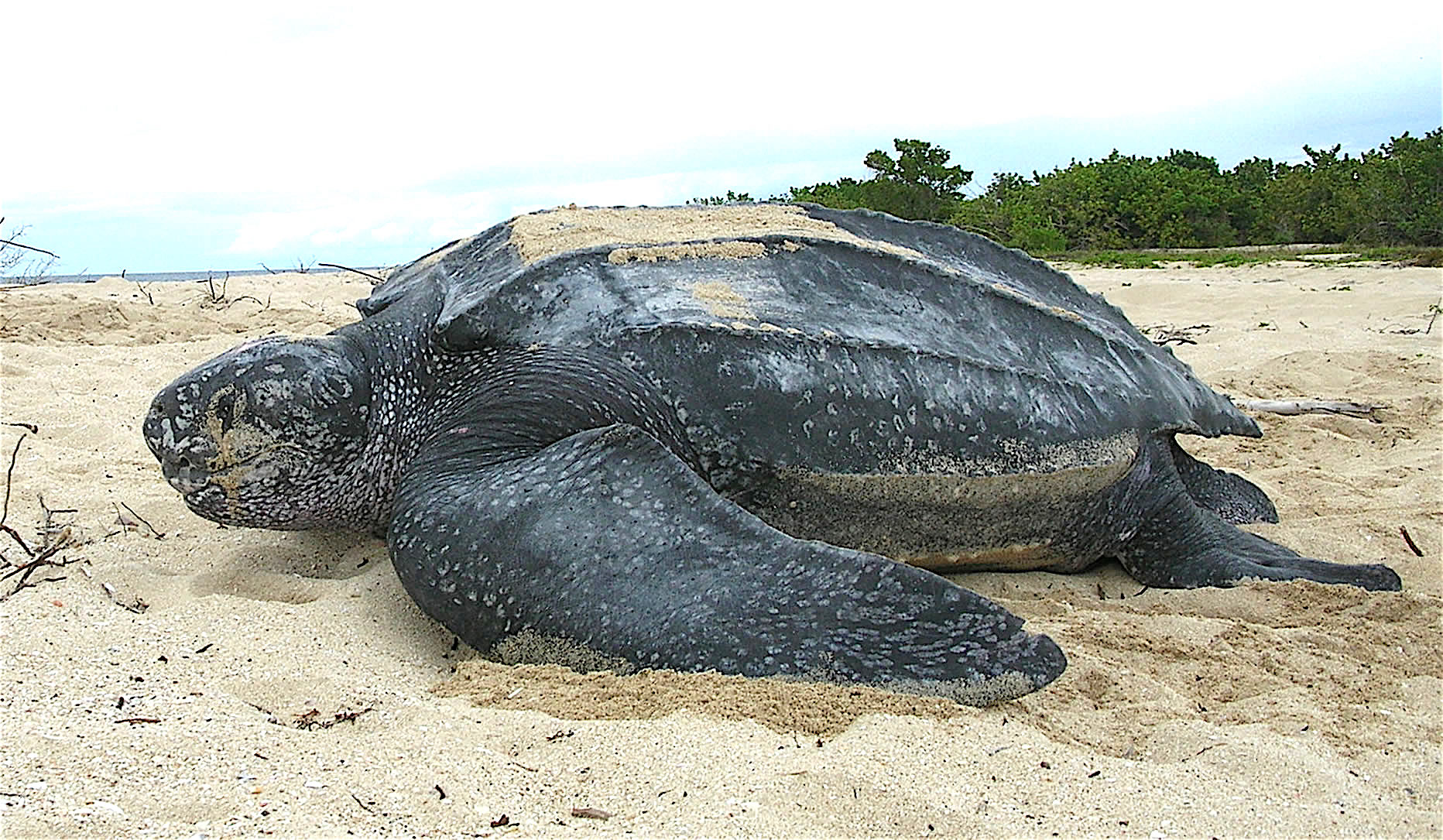
The largest sea turtle and the deepest-diving reptile known, able to keep its body warmer than the icy deep water thanks to a unique soft, cartilaginous shell.
🗺️ Geographic range
All the world's tropical and temperate seas, with the largest nesting grounds in Central America, West Africa and Southeast Asia.
📊 Population
Global population estimated by the IUCN to be declining, at a few tens of thousands of nesting females, with strong regional disparities (some Pacific populations are critically endangered).
⚠️ Threats
Fishing gear bycatch
Frequently entangled in nets and lines intended for other species.
Source: IUCN — Red List of Threatened Species
Plastic debris ingestion
Mistakes floating plastic bags for the jellyfish it feeds on.
Source: IUCN — Red List of Threatened Species
Egg harvesting and nesting beach degradation
Coastal development and egg collection reduce nesting success on some beaches.
Source: IUCN — Red List of Threatened Species
Habitat
- Atlantic Ocean · High seas / open water · Mesopelagic zone · Migration
Behaviour
- Diet
- Almost exclusively jellyfish, including some species toxic to other animals.
- Hunting
- Actively pursues jellyfish in open water, sometimes diving deep.
- Reproduction
- The female returns to lay eggs on the beach where she was born, several hundred eggs per season.
Physiology
- Anatomy
- A soft shell covered in skin and small bony plates, without the rigid scutes of other turtles.
- Adaptations
- A counter-current vascular network conserving body heat in cold, deep water.
🔗 Web of marine life
Predators
Prey
⚡ Its extraordinary abilities
- The deepest-diving reptile known, beyond 1,000 m
- Can keep its body warmer than the icy water thanks to a unique vascular system
🏆 Records
The largest living sea turtle
Can weigh up to about 700 to 900 kg.
Source: IUCN — Red List of Threatened Species
If you cross paths with this animal…
Risk: No danger to humans.
Behaviour: Peaceful, avoids contact.
Advice: Critically endangered in several regions: never approach a nest on a beach.
💡 Did you know?
- Feeds almost exclusively on jellyfish, including some toxic species.
- Can mistake a floating plastic bag for a jellyfish — one of the leading causes of death for the species.