Cnidarians
Silo of jellyfish, corals and anemones, from reefs to open water.
🌊 0–50 m (known range of the family)

Giant carpet anemone
Heteractis magnifica
Giant carpet anemone
Host to many clownfish that are immune to its own sting, it can live for decades in the same spot without ever moving.
🌊 0–20 m
- ⚡ Can live for decades in the same spot without ever moving
- ⚡ Maintains a symbiosis with the clownfish, which in turn protects it from certain predators

Box jellyfish
Chironex fleckeri
Box jellyfish
Considered one of the most venomous creatures in the sea, its tentacles carry a venom able to trigger cardiac arrest in humans within minutes.
🌊 0–20 m
- ⚡ Has up to 24 eyes, some able to form a true image
- ⚡ One of the fastest, most potent venoms in the animal kingdom
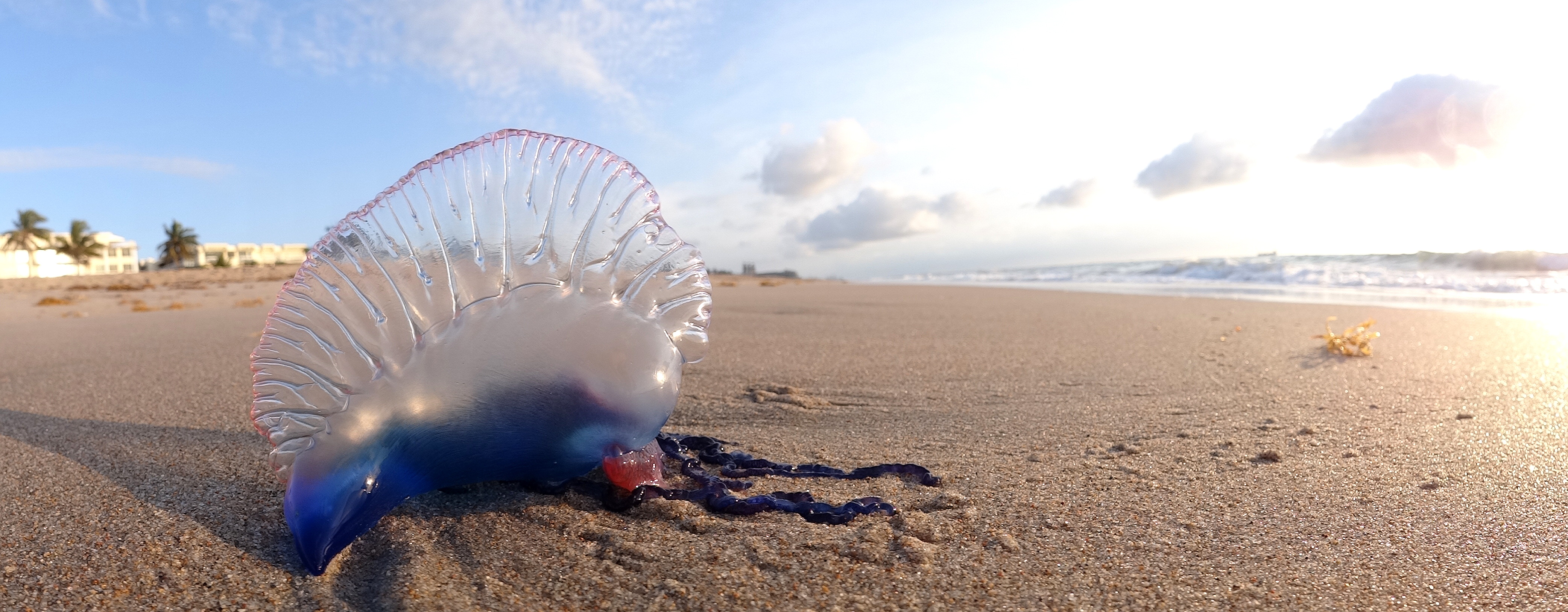
Portuguese man o' war
Physalia physalis
Portuguese man o' war
It isn't a jellyfish at all but a floating colony of thousands of microscopic individuals sharing one translucent sail, trailing venomous tentacles that can kill a fish in seconds.
🌊 0–50 m
- ⚡ A 'colony-individual': thousands of specialized clones fused into one floating organism
- ⚡ Venom that keeps stinging weeks after the animal has died

Grooved brain coral
Diploria labyrinthiformis
Grooved brain coral
Beneath its motionless, brain-like surface lies a living colony of thousands of tiny animals, slowly building — millimeter by millimeter — an architecture centuries in the making.
🌊 1–30 m
- ⚡ Can live for centuries, ranking among the longest-lived animals on Earth, its skeleton built at barely 3.5 mm per year
- ⚡ Hosts millions of symbiotic algae inside its own tissue, harvesting sunlight like a plant while remaining a true animal