Marine mammals
Silo of whales, dolphins, seals and other mammals that returned to the sea.
🌊 0–2000 m (known range of the family)
- 🌊Arctic Ocean
- 🌊Atlantic Ocean
- 🌊Pacific Ocean
- 🌊Southern Ocean
- 🌊Caribbean Sea
- 🪸High seas / open water
- 🪸Kelp forest / seaweed meadow
- 🪸Mangroves
- 🪸Sea Ice

Narwhal
Monodon monoceros
Narwhal
Nicknamed "the unicorn of the sea", this Arctic whale carries a long spiralled tusk that long fuelled the unicorn myth in Europe.
🌊 0–800 m
- ⚡ Its spiralled tusk, actually a tooth, can exceed 2.5 metres in length
- ⚡ Dives up to 800 m on a single breath to hunt, one of the deepest dives known in a marine mammal

Humpback whale
Megaptera novaeangliae
Humpback whale
Famous for its spectacular breaches out of the water and its complex songs that can last for hours, it undertakes one of the longest migrations known in any mammal every year.
🌊 0–200 m
- ⚡ Songs that can last for hours and spread from one population to another
- ⚡ Hunts in groups using a coordinated bubble net, a rare technique among whales

Sperm whale
Physeter macrocephalus
Sperm whale
The unwitting hero of the novel Moby-Dick and centuries of sailors' legends of titanic battles against monsters of the deep, the sperm whale does indeed fight real duels with the giant squid, whose sucker scars it often carries on its skin.
🌊 0–2000 m
- ⚡ Often carries sucker scars on its skin left by battles with giant squid
- ⚡ Among the deepest divers of all marine mammals, beyond 2,000 m, on a single breath for over an hour

Sea otter
Enhydra lutris
Sea otter
With not an ounce of blubber to shield it from the cold, it survives in the icy Pacific thanks to the densest fur in the animal kingdom — and cracks open shellfish with rocks like a tiny artisan.
🌊 0–30 m
- ⚡ The densest fur of any animal on Earth, its only defense against the cold with no body fat
- ⚡ One of the few non-primate mammals known to use tools (rocks) to open its prey

Blue whale
Balaenoptera musculus
Blue whale
The largest animal ever to have existed on Earth, the blue whale makes the ocean tremble with the sound of its own heartbeat, audible from over two miles away.
🌊 0–200 m
- ⚡ The largest animal ever recorded on Earth — heavier than any known dinosaur
- ⚡ Its heartbeat can be detected from over 3 km away underwater

Walrus
Odobenus rosmarus
Walrus
Recognisable by its long tusks, used to haul itself out of the water and assert its social rank, it locates prey buried in the sediment using extremely fine sensory whiskers.
🌊 0–80 m
- ⚡ Locates buried prey using hundreds of sensory whiskers
- ⚡ Uses its tusks like ice axes to haul itself out of the water onto the pack ice

Orca
Orcinus orca
Orca
The largest dolphin in the world and such a sophisticated apex predator that some populations develop hunting techniques passed down culturally from generation to generation.
🌊 0–500 m
- ⚡ Develops hunting techniques unique to each population, passed down culturally
- ⚡ A distinct vocal repertoire per family group, a form of dialect

Leopard seal
Hydrurga leptonyx
Leopard seal
Antarctica's top predator after the orca, recognisable by its reptilian head and immense jaw, able to hunt both penguins and other seals.
🌊 0–300 m
- ⚡ Can both filter krill and hunt large prey such as a penguin or a young seal
- ⚡ One of the few seals known to actively prey on other seals

Caribbean manatee
Trichechus manatus
Caribbean manatee
Nicknamed the "sea cow", its peaceful demeanour and habit of grazing on seagrass may have inspired mermaid tales among sailors of old.
🌊 0–10 m
- ⚡ Can eat up to 50 kg of aquatic vegetation a day
- ⚡ Its peaceful habits may have inspired mermaid tales among sailors

Northern fur seal
Callorhinus ursinus
Northern fur seal
Able to sleep at sea by folding its flippers out of the water like sails, it spends nearly ten months a year at sea, far from any coast.
🌊 0–200 m
- ⚡ Can sleep at sea by folding its flippers out of the water like sails
- ⚡ The densest fur in the animal kingdom, up to 300,000 hairs per square centimetre

Polar bear
Ursus maritimus
Polar bear
Revered and feared as Nanuq in Inuit mythology, where it is sometimes described as an almost-human spiritual ancestor for its intelligence, it is also classified as a marine mammal, given how much its life depends on sea ice and its swimming ability.
🌊 0–5 m
- ⚡ Can smell a seal through more than a metre of compacted snow and ice
- ⚡ Classified as a marine mammal: able to swim continuously for over 100 km in open sea
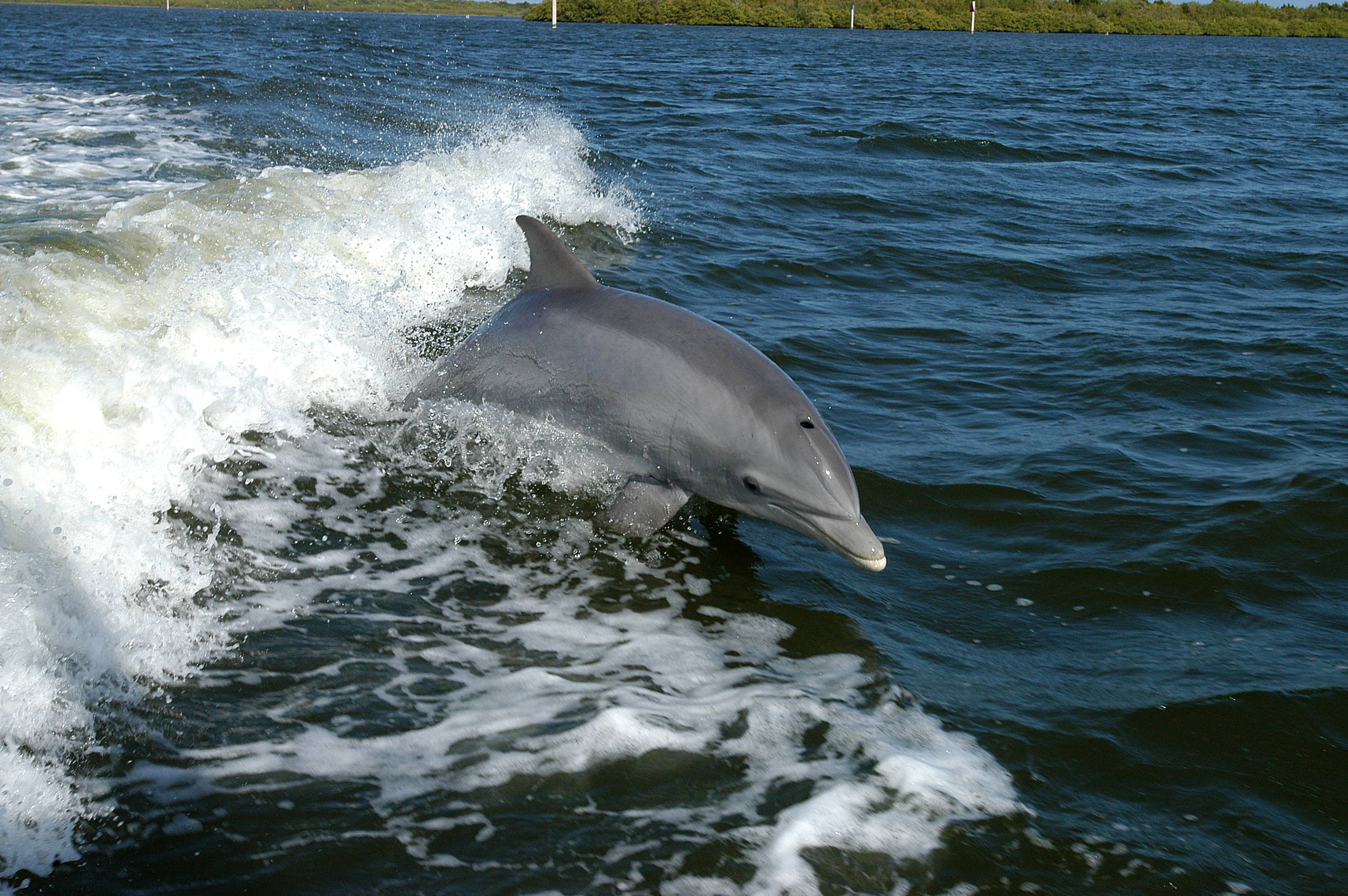
Common bottlenose dolphin
Tursiops truncatus
Common bottlenose dolphin
Intelligent, playful, and capable of recognizing its own reflection, the bottlenose dolphin communicates through a unique 'signature whistle' that functions almost like a name.
🌊 0–400 m
- ⚡ A unique 'signature whistle' per individual, used like a name for its entire life
- ⚡ Echolocation so precise it can detect a fish buried under sand