
Marine mammals
Orca
Orcinus orca
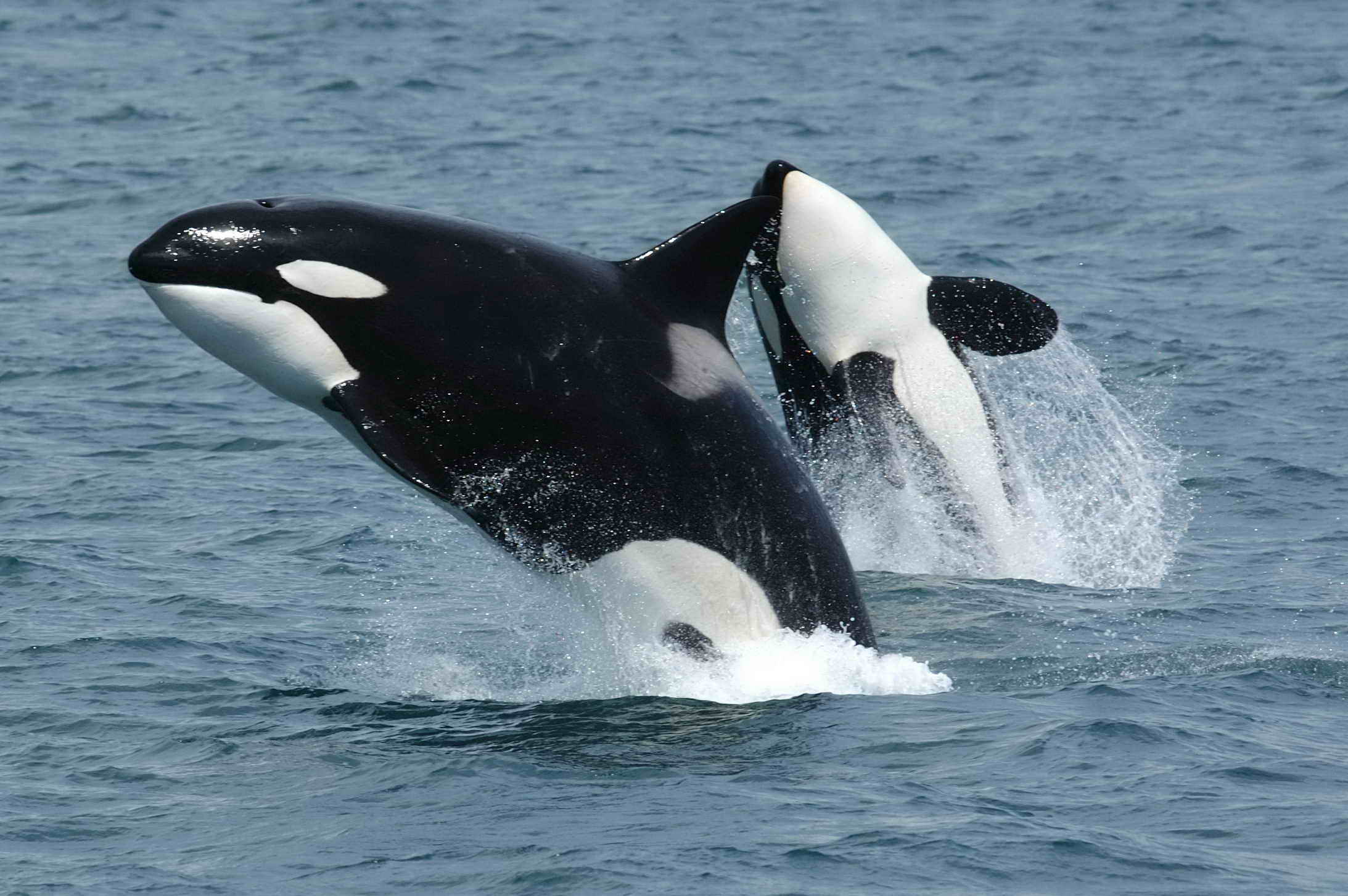
The largest dolphin in the world and such a sophisticated apex predator that some populations develop hunting techniques passed down culturally from generation to generation.
🗺️ Geographic range
Found in every ocean in the world, from the poles to the tropics, with distinct resident and migratory populations.
📊 Population
The IUCN cannot assign a single global status: the species comprises very distinct populations (ecotypes), some stable and some threatened, hence a data-deficient classification at the global level.
Habitat
- Pacific Ocean · High seas / open water · Epipelagic zone · Permanent
Behaviour
- Diet
- Fish, seals, sea lions, and occasionally large sharks or young whales depending on the population.
- Hunting
- Sophisticated cooperative techniques, sometimes passed down culturally (such as deliberately beaching to catch seals).
- Reproduction
- Gestation of about 17 months, very long mother-calf bonds.
Physiology
- Anatomy
- A tall dorsal fin that can exceed 1.8 m in males.
- Adaptations
- Sophisticated echolocation for hunting and navigating, a brain among the largest in the animal kingdom.
🔗 Web of marine life
⚡ Its extraordinary abilities
- Develops hunting techniques unique to each population, passed down culturally
- A distinct vocal repertoire per family group, a form of dialect
🏆 Records
The largest member of the dolphin family
Can exceed 9 metres in length in males.
If you cross paths with this animal…
Risk: Low for humans in the wild: no confirmed fatal attack at sea.
Behaviour: Curious but generally not predatory toward humans.
Advice: Observe from a distance and never feed.
💡 Did you know?
- Some orcas deliberately beach themselves to catch sea lions, then right themselves unaided.
- Females can live for decades after menopause, an exceedingly rare trait among mammals.